
Win the Amazon Buy Box Without Burning Margin
Learn how to win the amazon buy box with pricing control, inventory systems, fast fulfillment, and feedback workflows you can delegate to VAs.
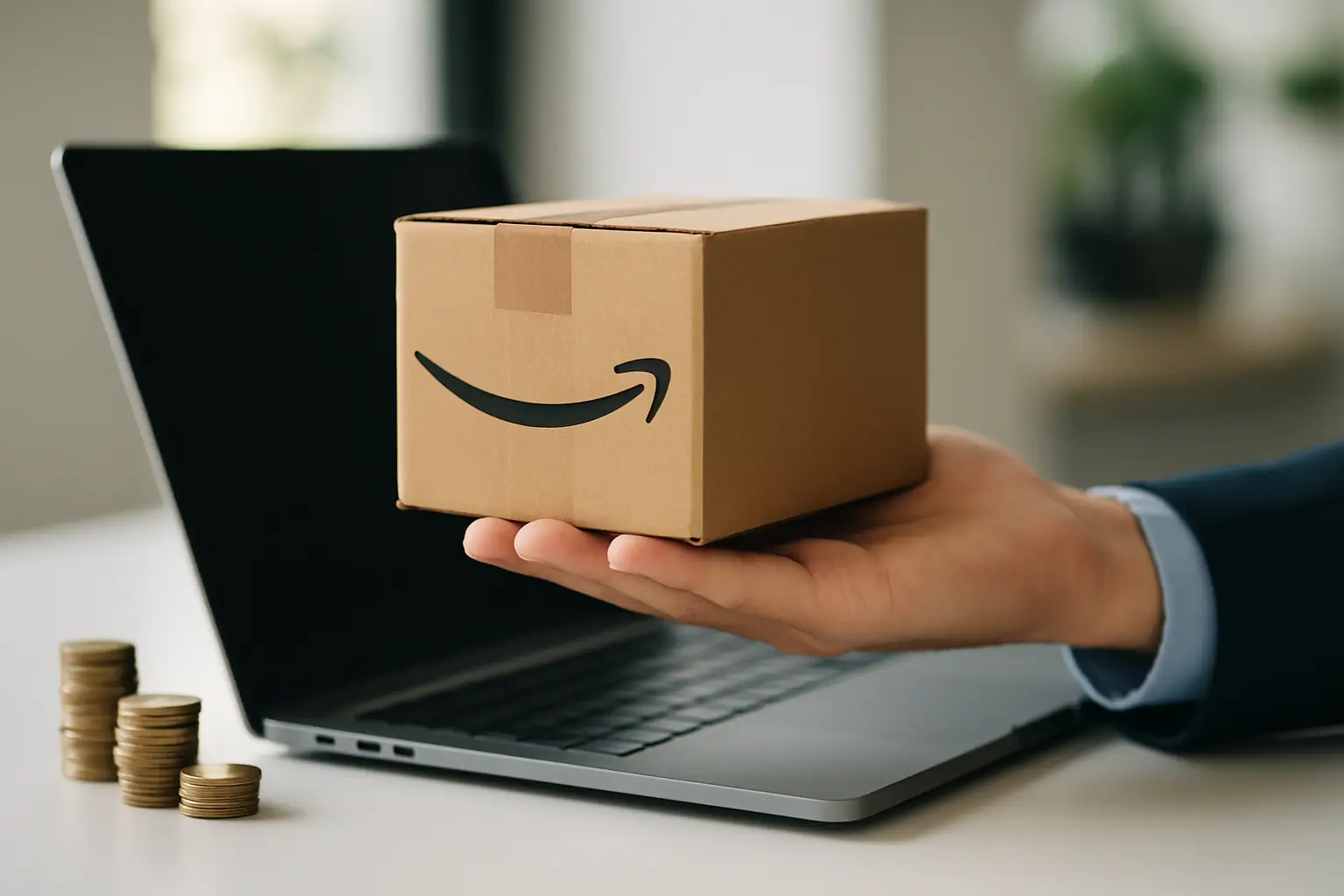
If your listing gets traffic but sales feel random, you are probably not losing because the product is bad. You are losing because the Buy Box is being awarded to a different offer more often than you think. On Amazon, the Buy Box is not a trophy you win once. It is a decision Amazon re-makes constantly based on execution: price, fulfillment performance, inventory health, and customer experience.
Most sellers try to brute-force this with aggressive price cuts. That can work for a day, then your margin collapses, cash flow tightens, and you stock out, which makes the Buy Box even harder to win next week. The real play is building a system that makes Amazon trust your offer more than the alternatives, without racing to the bottom.
What the Buy Box actually rewards
Amazon cares about one thing: the highest probability that the customer gets the item fast, in the expected condition, with minimal service issues, at a competitive total price. That is it.
The Buy Box is awarded at the offer level, not the product level. Multiple sellers can share a listing, and Amazon rotates the Buy Box to the offer it believes will deliver the best customer outcome. Even if you are the brand owner, you can lose the Buy Box if your offer is slower, riskier, or less competitive.
When you decide how to win the amazon buy box, think in inputs you can control. Amazon’s algorithm is the judge, but your operations are the case you present.
Start with the offer stack: total landed price, not “lowest price”
Amazon evaluates the customer’s total cost: item price plus shipping, plus any friction that makes the purchase feel risky. Sellers often stare at the item price alone and miss the real lever.
If you are FBM, shipping cost and delivery promise are part of your competitiveness. If you are FBA, your shipping promise is usually strong, but you can still lose if your price drifts or you stock out.
A clean strategy is to set a minimum viable margin first, then build a pricing system that competes above that floor. Your floor should include product cost, inbound freight, Amazon fees, returns allowance, and a buffer for promos or price tests on Shopify. If you do not know your floor, you do not have a pricing strategy - you have vibes.
Here is the trade-off: a higher price can still win the Buy Box if your offer is clearly more reliable, but only up to a point. If you are 10% higher than the next offer, you are asking Amazon to bet against its own “best deal” promise. Tighten your operations so you can stay competitive without bleeding.
Fulfillment is your Buy Box multiplier
Fulfillment is where most sellers either dominate or disappear. Amazon is biased toward predictable delivery and low defect rates. That is why FBA tends to win more often.
If you can use FBA, do it for your main Buy Box ASINs. You are buying operational leverage: Prime shipping, Amazon-handled customer service, and fewer ways to mess up.
If you run FBM, you must operate like a warehouse, not like a side hustle. You need consistent handling time, reliable carrier pickups, valid tracking, and low late shipment and cancellation rates. One bad week can tank your Buy Box share and it takes time to recover.
A practical approach is hybrid execution: keep FBA as your primary offer, and use FBM only as a controlled backup when inventory is tight or when a product has constraints that make FBA inefficient. Hybrid can protect revenue, but if your FBM metrics are sloppy, it can also poison your account health. It depends on whether you can run FBM with discipline.
Inventory health: the quiet Buy Box killer
Stockouts do not just lose sales. They teach Amazon your offer is unreliable. After a stockout, you often come back with weaker placement and a harder fight for the Buy Box.
Inventory planning is not glamorous, but it is one of the highest ROI systems you can build. You need three numbers that are always current: daily sales velocity, lead time (supplier plus freight plus receiving), and reorder point.
A simple rule: reorder before you need to. If your lead time is 45 days and you sell 10 units/day, you cannot wait until you have 200 units left. That is a math problem, not a mindset problem.
This is also where delegation pays off. Your VA can maintain a weekly inventory dashboard, update lead times, and flag risk ASINs. You stay in control by reviewing decisions, not by living inside spreadsheets.
Account and offer performance: protect the metrics Amazon trusts
Amazon does not reward “effort.” It rewards clean performance.
Even if you are not fighting other sellers on a listing, your own Buy Box eligibility can be impacted by account health. You want to run your operation to minimize customer friction. That means low order defect rate, low returns from preventable issues, accurate product condition, and fast customer response.
Two overlooked levers that improve performance without discounting:
First, listing accuracy. If your title, images, variations, or product details create mismatched expectations, returns go up. Returns and negative experiences are poison for Buy Box trust.
Second, customer service cadence. If you are FBM, late responses and unresolved issues can stack quickly. If you are FBA, Amazon handles much of it, but you still need to monitor messages, feedback, and product issues.
Set a daily 15-minute “account health scan” that your VA runs, with escalation rules. You do not need to be the one reading every message, but you do need a system that catches problems before they become defects.
Feedback and reviews: build a predictable workflow
Reviews do not directly “buy” you the Buy Box, but they shape conversion rate and customer confidence, which affects Amazon’s belief that your offer will satisfy.
The mistake is treating reviews as luck. You want a process that improves the probability of positive feedback while staying compliant.
Focus on controllables: ship on time, package well, avoid confusing bundles, and handle issues fast. Then run a light-touch follow-up that is consistent. If your product has setup complexity, include a clear insert that reduces user error and points customers to support.
This is a strong spot for AI automation. Draft message templates, categorize inbound messages by intent, and route edge cases to you. Your VA executes the workflow; AI reduces the time cost.
Duplicate or competing offers: control the listing, or at least the damage
If you are sharing a listing with other sellers, you are in a Buy Box war whether you like it or not. You can win by being operationally superior, but you can also win by reducing the reasons buyers and Amazon choose someone else.
Start by auditing the listing experience. If the detail page is messy, inconsistent, or missing key info, you are inviting returns and confusion that hurt everyone - including you.
If you are the brand owner, tighten distribution and packaging so “new” stays new and counterfeit risk stays low. If you are a reseller, be realistic: some listings are structurally hostile because too many sellers are competing and price is the only differentiator. In that case, you either accept lower margins or you shift focus to ASINs where you can win on execution.
Off-Amazon traffic can stabilize your Buy Box share
Buy Box winners are often the offers Amazon trusts most. One way to earn that trust is consistent sales velocity paired with low customer issues.
Off-Amazon traffic helps because it gives you a second engine for demand, which can smooth out slow days and improve your inventory predictability. The goal is not vanity traffic. The goal is controlled demand that your operations can fulfill.
Meta ads, influencer seeding, and short-form social can all work, but only if your funnel is clean. Many brands drive traffic to an Amazon listing that is losing the Buy Box half the time, which means they pay to send buyers to someone else’s offer. Fix Buy Box stability first, then scale external traffic.
A smart ecosystem move is to use Shopify for quick product tests and audience building, then push proven winners harder on Amazon where scale is easier. Amazon is your volume engine. Shopify is your control engine. Your Buy Box strategy sits in the middle: it protects the economics that make scale possible.
A simple operating system to win the Buy Box consistently
If you want repeatable results, stop treating Buy Box wins as a daily mystery. Treat them as an operations scoreboard.
Build a weekly cadence around four dashboards: pricing vs floor margin, inventory risk by ASIN, fulfillment and account metrics, and customer experience signals (returns reasons, negative feedback themes). Your VA updates the dashboards, flags anomalies, and executes standard fixes. You review, make high-leverage decisions, and adjust thresholds.
This is exactly the kind of execution-first infrastructure we push inside the WAH ecosystem because it buys you time and protects profit as you scale - and you can find more tactical systems like this at WAH Academy’s resource hub.
When price cuts are the right move (and when they are sabotage)
Sometimes the fastest way to regain Buy Box share is a temporary price correction. If a competitor is only slightly lower and your velocity is dropping, a controlled reduction can re-stabilize your sales rank and keep your inventory moving.
But if you are cutting price because you do not know your metrics, you are gambling. You can “win” the Buy Box today and lose the business next month.
Use price moves like a scalpel: time-bound, measured against margin floors, and reversed once performance normalizes. If you need constant deep cuts to win, the real issue is usually upstream - costs too high, lead times too long, or fulfillment not competitive.
The closing thought
The Buy Box is Amazon’s way of saying, “Prove you can deliver.” If you build a business that delivers predictably - on price, on inventory, and on customer experience - you stop chasing the Buy Box and start collecting it as a byproduct of clean execution.
Take the first step towards building your Amazon eCommerce business.
Join Mini Course