
Amazon FBA Fees Explained (So You Keep Profit)
Amazon FBA fees explained for sellers who want clean margins. Learn referral, fulfillment, storage, and hidden charges plus how to control them.
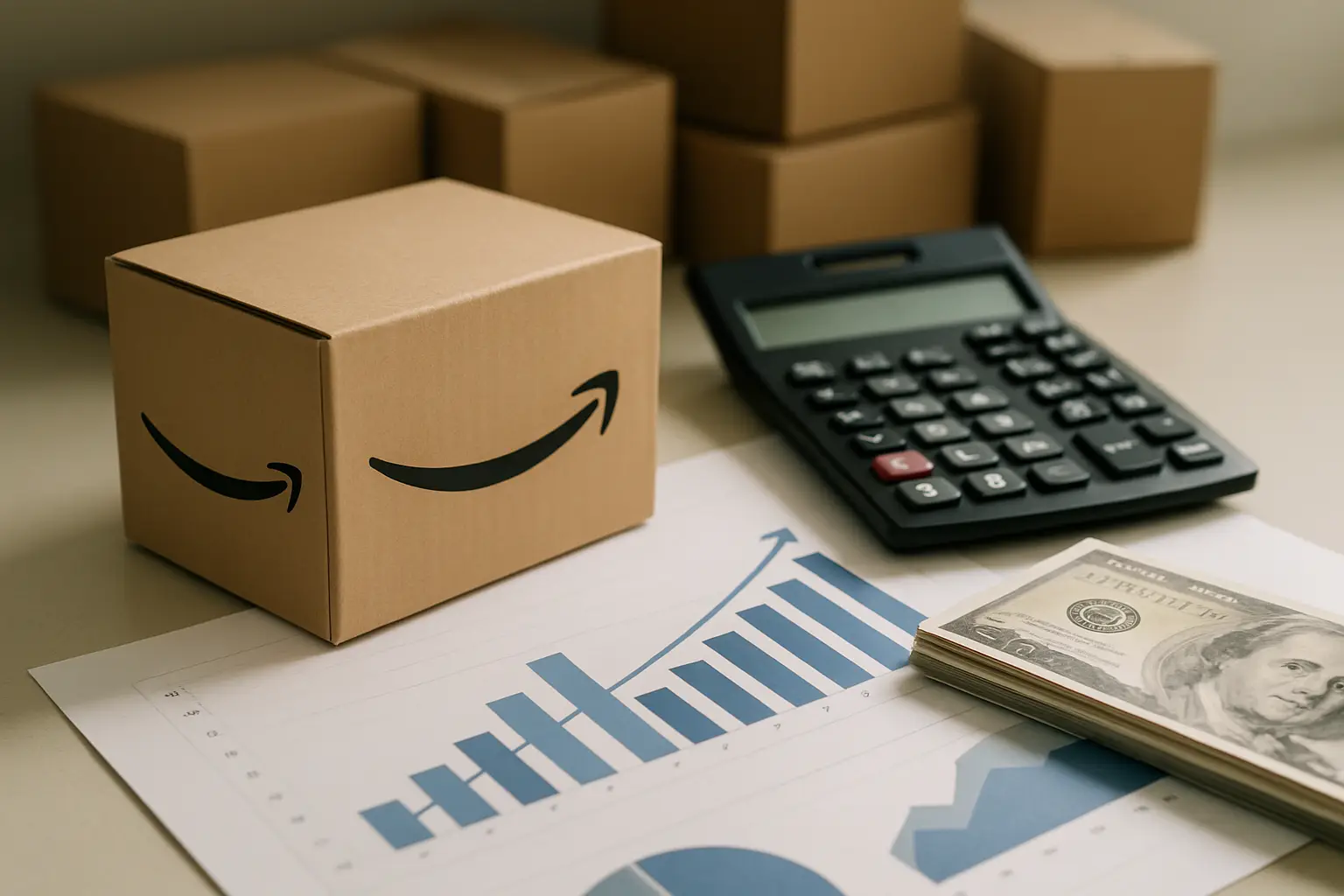
Amazon FBA fees are the costs Amazon charges for selling, storing, picking, packing, shipping, and servicing your product orders through Fulfillment by Amazon.
The main fees beginners must understand are referral fees, FBA fulfillment fees, monthly storage fees, and extra charges such as returns, removals, prep, placement, or long-term storage risk. Profit comes from calculating all of these before you order inventory.
How do Amazon sellers keep profit after FBA fees?
Amazon sellers keep profit after FBA fees by doing the margin math before they buy inventory, not after the first payout arrives. The product has to survive referral fees, FBA fulfilment fees, storage, returns, ads, discounts, freight, packaging, and slow-selling stock risk.
For beginners, the safer WAH Academy approach is to validate lean first instead of committing to a large order. A small 3–5 unit test, pre-order signal, landing-page test, or paid-ad validation can reveal whether buyers will pay enough before you lock cash into bulk inventory.
- Start with the landed cost: Include product cost, freight, duties, inspection, packaging, and prep.
- Add Amazon’s fee stack: Referral fee, FBA fulfilment fee, storage, removals, returns, and placement or prep fees where relevant.
- Model advertising honestly: Many beginners forget that Amazon PPC can turn a good gross margin into a weak net margin.
- Protect against slow stock: Slow-moving inventory creates storage fees, price cuts, and cash-flow pressure.
- Use tools as checks, not guarantees: Helium 10, Jungle Scout, and Amazon calculators can help estimate the numbers, but real buyer demand still needs validation.
Amazon FBA Fee FAQ for Beginners
How do Amazon sellers keep profit after FBA fees?
They choose products with enough margin, calculate all Amazon and non-Amazon costs before ordering inventory, avoid slow-moving stock, and test demand before scaling.
Do Helium 10 or Jungle Scout show real profit after fees?
They can estimate sales, keywords, and some costs, but beginners still need to verify landed cost, FBA fees, ad spend, returns, and actual buyer willingness to pay.
What is the biggest fee mistake beginners make?
The biggest mistake is looking only at product cost and sale price while ignoring FBA fulfilment fees, storage, referral fees, ads, returns, and cash tied up in unsold inventory.
How can a beginner reduce FBA fee risk?
Validate the product with a small test, landing page, pre-order, or very limited inventory first, then scale only after the fee math and buyer response are clear.
Beginner FBA Fee Checklist Before Buying Stock
Use this checklist before you approve a supplier order:
- Landed cost: Product cost plus freight, duties, inspection, and packaging.
- Referral fee: Amazon's category-based percentage of the sale.
- Fulfillment fee: The pick, pack, and ship cost based on size and weight.
- Storage risk: Monthly warehouse costs and the risk of slow-moving inventory.
- Return cost: Refunds, replacement handling, and damaged inventory risk.
- Ad cost: Expected spend to generate launch traffic and sales momentum.
- Target margin: The profit left after all costs, not just the gap between product cost and selling price.
For related planning, read how to calculate Amazon FBA fees fast, an example FBA profit breakdown, and Amazon FBA pricing for beginners.
Do the fee math before you buy inventory, not after the payout feels smaller than expected.
Fees are only one part of the decision. If you are weighing the full business case, read our broader guide on whether Amazon FBA still worth it in 2026 after accounting for saturation, Amazon PPC, fulfillment costs, and competition.
Amazon FBA fees explained: the four buckets
Amazon fees show up in a few predictable categories. The mistake is treating them like one number.
First is the referral fee. This is Amazon’s cut for bringing you the customer. It’s typically a percentage of the sale price and varies by category.
Second is the FBA fulfillment fee. This covers pick, pack, shipping to the customer, and customer service for that order. This fee depends heavily on size tier and shipping weight.
Third is storage. You pay monthly for space in Amazon’s warehouse, and the rate changes depending on the time of year and how much space your inventory uses.
Fourth is everything else: returns processing, inbound placement or prep issues, removals, long-term storage risks, and the occasional “you didn’t plan for this” charge that shows up because your operational system wasn’t tight.
If you can forecast these buckets before you order inventory, you stop guessing and start controlling.
Referral fees: your “rent” for Amazon’s traffic
Referral fees are simple in concept and painful in impact. Amazon takes a percentage of the selling price (and in many cases, it’s calculated on the total including shipping or other components depending on how your offer is structured).
Two things matter here.
One, category selection changes the percentage. The same product can be profitable in one category and mediocre in another, purely because the referral fee rate shifts.
Two, price increases don’t always help as much as you think. If your referral fee is percentage-based, raising price raises the fee. That can still be worth it, but only if conversion rate holds and your unit economics improve.
Operator move: don’t debate pricing based on feelings. Build a quick fee model (even a one-page spreadsheet) and make your pricing decisions based on contribution margin per unit after referral and fulfillment fees.
FBA fulfillment fees: where packaging wins or loses
Fulfillment fees are where most sellers get surprised, because they think in product cost and selling price, not in dimensions and weight.
Amazon charges based on size tier and shipping weight. That means your packaging decisions are not aesthetic. They are a profit lever.
A small change in package dimensions can bump you into a higher size tier. A heavy insert, an oversized box “for protection,” or a bulky bundle can quietly increase the fulfillment fee on every order.
There’s also a strategic trade-off here. Sometimes you accept a higher fee because the product experience improves, returns drop, and your brand builds trust. Other times, you redesign packaging and keep the experience while shrinking the box. Both can be correct - it depends on your category’s return behavior and how fragile the item is.
Execution standard: lock packaging specs early. Don’t let your supplier improvise carton size. Write the exact dimensions and target weight into your production checklist and have your VA verify it against the supplier’s packing list before the order ships.
Monthly storage: the silent margin killer
Storage fees feel small until you’re overstocked. Then they become a tax on bad forecasting.
Amazon charges storage monthly based on cubic footage and the time of year. Q4 rates are typically higher, which means the same inventory that was “fine” in spring can become expensive in the holiday period.
Storage is also where bad inventory discipline shows up. If you keep reordering because you’re scared of stockouts, but your sell-through is slow, Amazon charges you to hold your indecision.
Your job is to align reorder cadence with demand reality. That means tracking days of cover, sell-through, and lead times like a serious operator.
System move: build a weekly inventory rhythm. One VA-owned report, reviewed by you in 10 minutes, that flags items below reorder point and items that are drifting into overstock. This one habit prevents panic shipments and storage bleed.
A few fees sellers don’t plan for (but should)
Most “fee surprises” aren’t surprises. They’re just not modeled.
Returns are a big one. In some categories, returns processing fees apply, and even when the fee is minimal, returns still cost you margin through refunds, damaged inventory, and increased operational load.
Removal and disposal fees matter when you decide to clean up dead stock. If a product fails or demand changes, you may pay to pull inventory out, ship it somewhere else, or dispose of it.
Inbound issues can also trigger extra costs. If your labels are wrong, cartons don’t match the shipment plan, or prep requirements aren’t met, you can get hit with unplanned charges or delays that cost you sales velocity.
And then there’s aged inventory risk. Amazon has become increasingly strict about pushing sellers to move units. Even if specific long-term storage structures change over time, the principle stays the same: slow inventory gets expensive.
If you want to dominate profit, you plan an exit before you place the first order. What price will you discount to if sell-through is slow? How will you liquidate or multi-channel those units? What’s your deadline before you remove inventory?
The fee stack in real math (a clean way to think)
You don’t need a 40-tab spreadsheet. You need a repeatable method.
Start with your selling price. Subtract referral fee. Subtract fulfillment fee. Subtract landed cost (product cost plus shipping to Amazon, plus any prep). What’s left is your contribution margin per unit.
Then pressure-test it with reality:
If you run a price drop, does the margin stay acceptable?
If you get a higher return rate than expected, does the margin still work?
If you need to air ship a small batch to avoid a stockout, does that wipe out the profit on that cycle?
This is where most sellers in Asia-Pacific markets selling into the US get hit: cross-border logistics can swing landed cost dramatically. Your fee model should include “normal shipping” and “worst-case shipping” so you don’t build a business that only works when everything goes perfectly.
Control levers that actually reduce FBA fee pain
You can’t negotiate Amazon’s referral fee. You can control the decisions that multiply it.
Product size discipline beats “cool features”
Before you add a bonus accessory or upgrade the packaging, run the dimension and weight impact. Many products become unscalable because the seller “improved” the offer into a higher fee tier.
Inventory velocity is a fee strategy
Slow movers create storage fees and force you into discounting later. Faster velocity reduces storage exposure and stabilizes reorders.
This is one reason we like ecosystem thinking: use off-Amazon traffic (Meta ads, influencer marketing, short-form social) to support consistent demand, not just launch spikes. If you can smooth demand, you can order more accurately and keep storage under control.
Split your risk across channels
If inventory starts aging, having Shopify as an outlet gives you options. You can run your own promotions, bundles, or email offers to move units without being trapped inside a single marketplace dynamic.
Even if you still fulfill primarily through Amazon, the ability to direct demand to an owned storefront gives you leverage when a listing slows down.
Delegate the monitoring so it actually happens
Fee control is operations, not inspiration. Assign ownership.
A trained VA can track size/weight spec changes, audit shipments for prep compliance, watch inventory age, and flag storage risk early. Pair that with a simple AI workflow that summarizes weekly fee and inventory reports into a decision dashboard, and you stop reacting late.
If you want more systems like this, the resource hub at WAH Academy is built for execution-focused sellers who want scale without chaos.
When FBA is still worth it (even with the fees)
FBA fees can feel high until you price what you’re getting.
You’re outsourcing fulfillment operations, customer service, and delivery performance at a scale most brands cannot replicate on their own early on. For many products, that operational leverage is what allows you to expand SKUs, test variations, and build a multi-platform brand without hiring a full logistics team.
But “worth it” depends on your margin structure.
If your product is low-priced and bulky, FBA can crush you.
If your product is compact, priced with healthy contribution margin, and you manage inventory tightly, FBA becomes a growth engine.
If your product has unpredictable demand and long lead times, FBA can punish you through stockouts and expensive rush shipments unless you build forecasting discipline.
That’s the real answer: fees don’t decide winners. operators do.
The one habit that keeps fees from wrecking your month
Set a weekly cadence where you review three numbers per SKU: contribution margin, sell-through, and days of cover.
If any one of those goes sideways, you act that week, not “sometime later.” You adjust price, fix packaging, push off-platform traffic, or pause reorders. That’s how you keep Amazon’s fee stack from becoming your business partner with veto power.
Build your fee model once, train a VA to maintain it, and let automation handle the reporting. Then you can spend your time where it belongs: making decisions that move profit, not chasing missing dollars after they’re gone.
WAH Academy Mini Course
Want to understand whether ecommerce is right for your future?
Start with WAH Academy’s mini course to understand the business model, the realistic workload, the risks, and whether this path fits you before considering any larger coaching commitment.
Start Mini Course