
Influencer Marketing for Amazon Brands That Sells
Influencer marketing for Amazon brands works when you pair creator traffic with strong listings, clear systems, and VA-led follow-up for real profit.
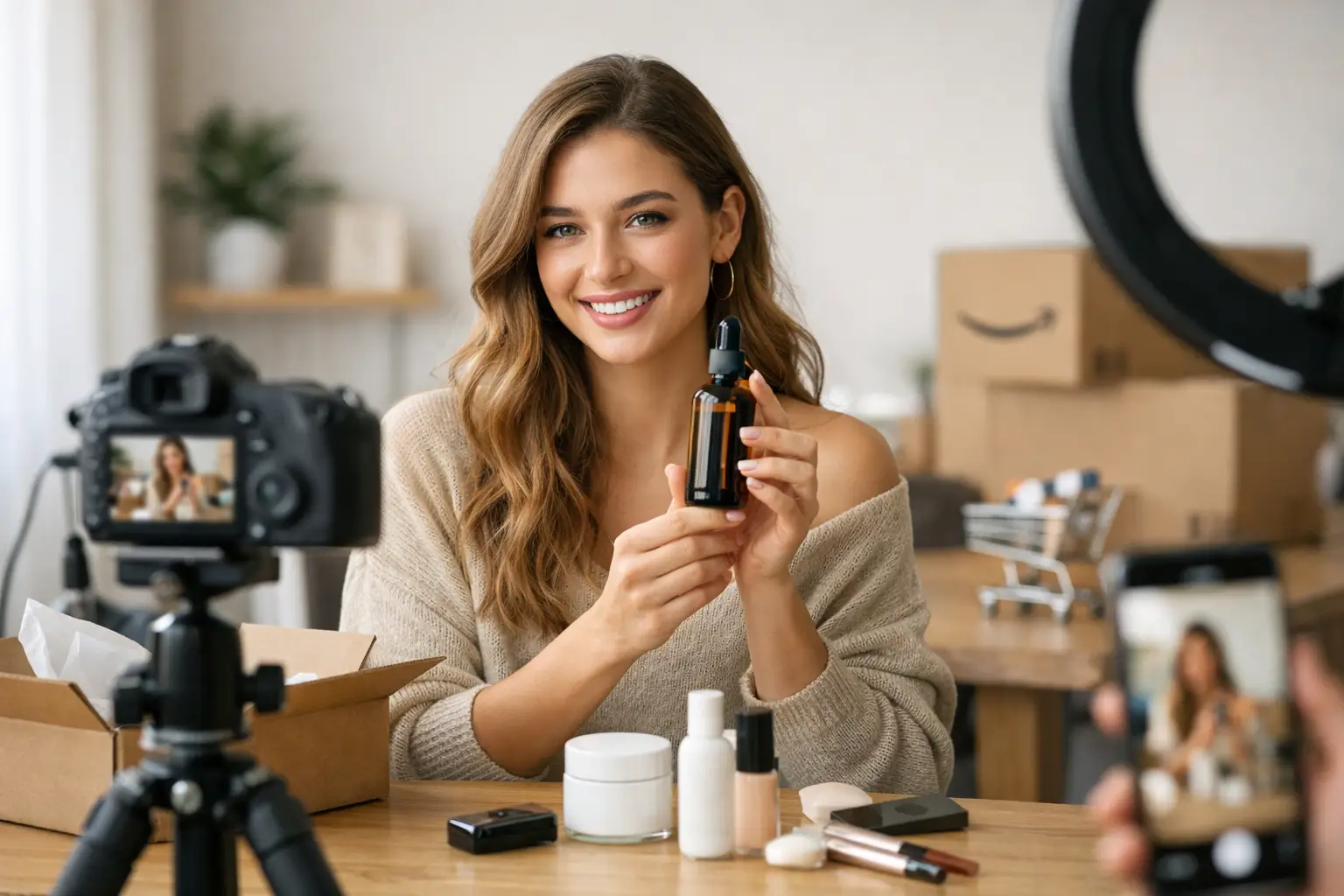
The best way to make influencer marketing for Amazon brands sell is to treat creators as a tracked sales channel, not a one-off awareness boost. The product listing, inventory, offer, creator fit, and follow-up system need to be ready before traffic arrives.
When those pieces are in place, creators can add trust and context while Amazon handles comparison, checkout, reviews, and fulfillment.
Amazon Influencer Campaign Checklist
- Check listing readiness: confirm the main image, title, bullets, reviews, and price can convert the extra traffic.
- Choose creators by buyer fit: prioritize audience relevance, comments with buying intent, and content style over follower count alone.
- Protect inventory: plan samples, launch timing, reorder points, and stock coverage before the creator content goes live.
- Track the campaign: record creator, post date, content angle, traffic lift, coupon use, ranking movement, and sales signals so the next campaign improves.
Related Amazon Growth Guides
- Amazon listing optimization guide for conversions
- Ultimate product launch checklist for Amazon
- Amazon FBA inventory forecasting for beginners
A lot of Amazon sellers waste money on creators for one simple reason - they treat influencer campaigns like a brand awareness stunt instead of a sales system. Traffic shows up, clicks spike, and then nothing sticks. If you want influencer marketing for Amazon brands to drive profit, you need more than a creator shoutout. You need a listing that converts, a product that makes sense for the audience, and an operating system that keeps campaigns moving without eating your week.
That last part matters more than most sellers realize. Influencer marketing can absolutely help an Amazon brand grow, but only if you stop managing it like a one-off experiment. The brands that win build repeatable outreach, tight campaign tracking, and delegated execution. That is how off-platform traffic becomes a real growth channel instead of a pile of screenshots and vague promises.
Why influencer marketing for Amazon brands works
Amazon is built for conversion. Creators are built for attention and trust. Put those together correctly and you have a strong growth loop.
A good creator can introduce your product with context that your Amazon listing cannot. They can show how it fits into a routine, solve objections in plain language, and create urgency through social proof. Then Amazon does what it does best - capture high-intent buyers who are ready to purchase now.
This is especially useful for products that need demonstration, niche positioning, or lifestyle framing. A kitchen gadget, beauty accessory, pet product, fitness item, or home organization product often performs better when someone credible shows it in use. But not every category gets the same lift. Commodity products with weak differentiation may struggle, while products with a visible before-and-after or a clear use case often respond well.
The trade-off is that creator traffic is not automatically profitable. If your margins are thin, your listing is weak, or your inventory is unstable, influencer campaigns can expose those problems fast.
What has to be in place before you start
Before you send your first outreach message, fix the basics. Influencer traffic amplifies whatever is already true in your business. If the product is compelling and the listing converts, results improve. If not, you just pay to find out where your operation is sloppy.
Start with your listing. Your main image, title, bullets, and A+ content need to make the product easy to understand in seconds. Your reviews need to be credible enough that a buyer does not hesitate after clicking through from a creator mention. Pricing also needs to be realistic. If an influencer creates demand and the buyer lands on a listing that feels expensive relative to perceived value, conversion drops.
Inventory is another common problem. Sellers get excited about creator campaigns, send out samples, and then go out of stock right when interest builds. That kills momentum and can hurt ranking. Plan around lead times, reorder points, and campaign windows before outreach begins.
You also need a way to measure performance. Attribution is never perfect with influencer work, especially when buyers see a video on one day and purchase later. Still, you need a framework. Track creator, content date, estimated reach, traffic lift, conversion movement, unit sales during campaign windows, and any branded search increase. Good decisions come from pattern recognition, not guessing.
Choosing the right creators for an Amazon brand
The biggest mistake here is chasing follower count. Large creators can help, but size alone does not drive sales. Relevance, trust, and audience-product fit matter more.
For most Amazon sellers, micro and mid-sized creators are often the better starting point. Their audiences are usually tighter, engagement tends to be more believable, and costs are easier to control. A creator with 20,000 followers in a specific niche can outperform one with 500,000 broad followers who scroll past sponsored content all day.
Look for three things. First, the creator should already speak to the buyer you want. Second, their content style should fit how your product is used. Third, they should have a track record of getting comments that signal buying intent, not just passive likes.
A beauty creator who constantly gets questions about routines, product names, and where to buy is more valuable than a general lifestyle creator with inflated reach. The same logic applies in fitness, baby, pet, home, and tech accessories.
How to structure campaigns without creating chaos
Most sellers do not need a complicated influencer strategy. They need a controlled process that can be repeated weekly.
Start with a simple campaign model. Build a target list of creators by niche, audience size, region, and content quality. Send outreach in batches. Offer a clear brief, but leave enough room for the creator to speak naturally. Then track what gets posted, what traffic moves, and which creator profiles produce actual sales momentum.
This is where delegation changes everything. Founder-led outreach usually breaks down because it is inconsistent. You send ten messages one week, then ignore it for two weeks because inventory issues, customer service, and supplier negotiations take over.
A trained virtual assistant can own the operating layer. They can source creators, verify contact details, manage outreach sequences, track responses, coordinate product shipments, follow up on posting deadlines, collect content assets, and update campaign dashboards. The founder should still set the angle, approve creator fit, and review performance. But the heavy lifting should be off your plate.
If you want scale, build standard operating procedures early. Define creator qualification rules, outreach templates, sample approval steps, shipping workflows, follow-up timing, and reporting formats. Once that system is in place, influencer marketing stops being random.
Using AI to speed up influencer execution
AI helps most when it removes repetitive work, not when it replaces judgment.
Use it to draft personalized outreach variations, summarize creator profiles, categorize responses, and turn raw campaign notes into cleaner reporting. It can also help your VA analyze comment sections for buying signals or identify common language creators use when a product resonates.
Where sellers go wrong is handing strategy to automation. AI can suggest outreach copy, but it cannot tell you whether a creator actually fits your product, whether their audience trusts them, or whether the economics make sense. Use AI to move faster, not to stop thinking.
A practical setup is simple. Let your VA handle creator research and campaign admin, let AI assist with speed and organization, and keep strategic decisions with the founder or brand lead. That split protects quality while buying back time.
Content angles that convert better on Amazon
Not every creator post drives the same kind of buyer. If your goal is Amazon sales, focus on content that reduces friction.
Demonstration content works well because it shows exactly what the buyer is getting. Problem-solution content also performs strongly, especially for products that remove a daily annoyance. Comparison content can work if the creator explains why your product is easier, cleaner, faster, or more useful than alternatives.
What usually performs worse is vague lifestyle posting with no real product context. It may look polished, but polished does not always sell. Buyers coming from social need a reason to click and a reason to believe. That means clear use case, believable benefit, and product visibility.
It also helps when creator messaging matches your Amazon listing. If the creator emphasizes convenience but the listing focuses on premium materials, the buyer experiences a disconnect. Keep the core promise aligned.
The economics: when it makes sense and when it does not
Influencer marketing is not automatically right for every Amazon brand. It tends to work best when your product has healthy margins, clear visual appeal, and a buying journey that benefits from demonstration.
If your margins are very tight, gifting products and paying creator fees can become hard to justify. In that case, you may need to test with smaller creators, affiliate-style arrangements where appropriate, or a content-seeding approach before committing to bigger deals.
Timing also matters. If your listing is new and under-reviewed, creator traffic may not convert well yet. If your operations are unstable, fulfillment is inconsistent, or customer feedback is weak, fix those first. Traffic does not solve conversion problems.
The better question is not whether influencer marketing works. It is whether your business is ready to turn attention into profit.
A simple operating model to follow
For most sellers, the strongest path is to test small, document results, then scale what proves itself. Pick one product, one niche, and one campaign window. Work with a focused group of creators rather than scattering budget across random accounts.
Run enough volume to see patterns. One creator is an anecdote. Ten to twenty well-selected creators starts to give you signal. You will learn which audience segments convert, which content angles move traffic, and which creators are worth building longer relationships with.
Then systemize it. Move creator sourcing, outreach, and follow-up to a VA. Use AI to reduce admin time. Review results weekly. Cut weak creator profiles fast and double down on the combinations that produce profitable sales movement.
That is the real advantage for disciplined operators. While other sellers are hoping a viral post saves the month, you are building an off-Amazon traffic machine with process, delegation, and clear math. If you approach influencer marketing for Amazon brands that way, it stops being a gamble and starts becoming a controllable growth channel.
The sellers who win here are not the loudest. They are the ones who build the cleanest system and execute it every week.
WAH Academy Mini Course
Want to understand whether ecommerce is right for your future?
Start with WAH Academy’s mini course to understand the business model, the realistic workload, the risks, and whether this path fits you before considering any larger coaching commitment.
Start Mini Course