
Amazon FBA vs FBM: Pick the Model That Scales
Amazon FBA vs FBM: Learn the real trade-offs in fees, control, returns, and scaling - plus how to choose the best model for your eCommerce stack.
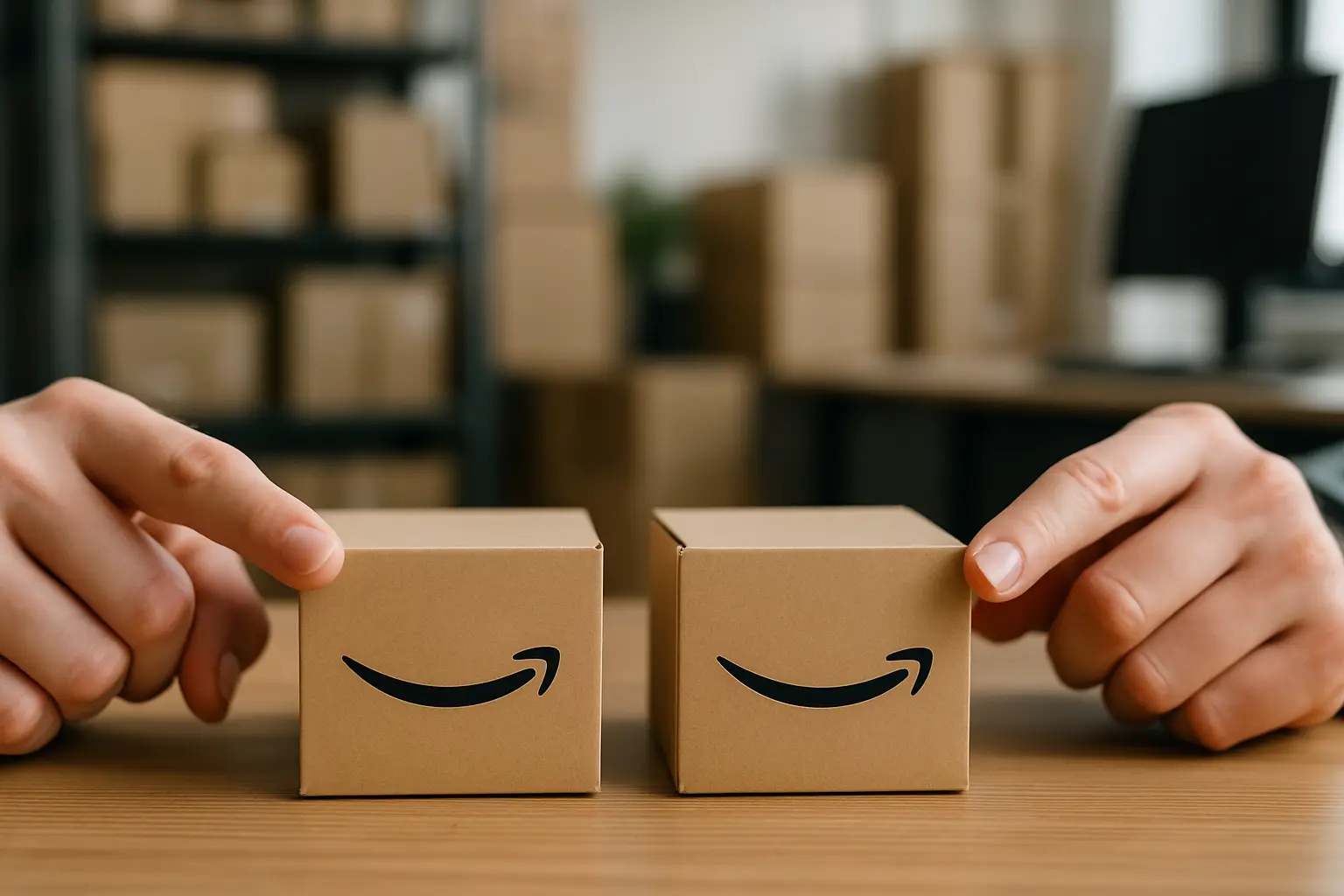
If you have a day job, a family, or just a healthy respect for sleep, the wrong fulfillment model will punish you fast. You will feel it first in customer messages, then in late-night label printing, and finally in your margins.
Amazon gives you two primary ways to fulfill orders: FBA (Fulfillment by Amazon) and FBM (Fulfilled by Merchant). The surface-level difference is simple. With FBA, Amazon stores and ships your inventory. With FBM, you (or your team) store and ship it.
But the decision is not really about shipping. It is about operational leverage, cash flow timing, and how much control you need to protect profit while you scale. Here is how to think about Amazon FBA vs FBM like an operator.
Amazon FBA vs FBM: what changes in your business
With FBA, you are outsourcing pick/pack/ship, basic customer service handling around delivery issues, and most of the returns workflow. You pay for that convenience through fulfillment fees, storage fees, and the indirect cost of sending inventory into Amazon’s network.
With FBM, you keep the wheel in your hands. That can mean higher workload, but it also means you can design your own SOPs, choose your packaging, bundle more creatively, control your warehouse or 3PL relationships, and sometimes protect margin better on large or slow-moving products.
The right choice depends on what bottleneck you are solving. If your bottleneck is time and consistency, FBA is often the cleanest lever. If your bottleneck is margin pressure, oversized products, or inventory risk, FBM can be the smarter play.
The money question: fees, margins, and hidden costs
Most sellers compare FBA fees to their carrier label cost and assume that is the full math. It is not.
FBA fees include fulfillment and storage, and those costs move based on size, weight, and how long units sit. If your product is compact, turns fast, and sells consistently, FBA can be extremely efficient because Amazon’s shipping rates and workflow are hard to beat.
FBM costs look cheaper at first, especially if you are shipping from home. But as soon as you scale past a small daily order volume, the “free” labor disappears. Either you pay with your time or you pay a team member, a VA to manage ops, a warehouse worker, or a third-party logistics provider. You also absorb more operational errors: missed cutoffs, wrong SKUs, late deliveries, and damage from inconsistent packing.
A clean way to compare Amazon FBA vs FBM is to stack three cost layers:
- Unit economics: landed cost, prep, packaging, and shipping or FBA fulfillment fee.
- Time economics: what it costs to run the process reliably at 20, 50, or 200 orders per day.
- Risk economics: what you lose when inventory sits too long, when returns spike, or when operations fail during peak periods.
Operators choose the model that keeps profit predictable, not the model that looks cheapest on day one.
Control vs leverage: who owns the customer experience
FBA gives you leverage. You ship inventory in bulk, and the rest is largely systemized. That leverage is what makes Amazon a scaling engine.
The trade-off is control. With FBA, Amazon controls how items are stored, packed, and shipped. Your customer may receive your product in an Amazon-branded box, combined with other items, and handled by processes you do not manage directly.
FBM gives you control. You decide packaging, inserts (within platform rules), bundling, and the exact unboxing experience. That matters if your brand relies on premium presentation or if you are building a customer list through off-Amazon channels and want consistency across platforms.
If your goal is a multi-platform ecosystem, control becomes more valuable. Many sellers use Shopify for fast testing and brand ownership, then use Amazon for scale. In that world, you want fulfillment decisions that do not trap you in one channel.
Inventory management: where sellers win or bleed
FBA forces discipline because Amazon’s storage model penalizes bad inventory decisions. If you send too much inventory and demand slows, storage costs and long-term aging problems can stack up. FBA rewards sellers who plan replenishment, forecast demand, and keep inventory moving.
FBM is more forgiving in storage cost terms if you have low-cost space, but it can quietly create a different kind of risk: dead stock spread across multiple locations, messy SKU counts, and restock errors that cause stockouts.
Either way, you need a process, not a feeling. This is where delegation pays off. A trained VA can own replenishment reporting, supplier lead time tracking, and weekly inventory health checks. Your job is to set the rules: reorder points, safety stock, and what “too much” inventory looks like for your cash flow.
Returns and customer messages: the workload you do not see
Returns are not glamorous, but they are part of the business.
With FBA, returns processing is largely handled for you. You still absorb the financial impact, but the operational burden is reduced. That matters when you are selling at volume and you want to protect your time.
With FBM, you manage return requests, labels, inbound packages, inspection, restocking, and refund timing. If you do not systemize this, it becomes a daily interruption machine.
The operational fix is straightforward: a tight returns SOP, templated messages, and a workflow that routes exceptions to you only when a decision is required. That is exactly the kind of work a VA can run once you define the rules.
Speed and trust: what Prime really changes
FBA often wins on delivery speed and customer trust because Amazon’s logistics network is built for high consistency. Faster delivery can lift conversion rates, reduce “where is my order” messages, and stabilize reviews because expectations are met.
FBM can compete on speed if you have a strong setup - local warehousing, tight cutoffs, and reliable carriers. But it takes effort and it takes monitoring.
So ask a blunt question: do you want to build a shipping department, or do you want to build a product and brand machine? If you are aiming to scale quickly, outsourcing shipping to FBA can remove an entire category of daily friction.
When FBA is usually the smarter default
FBA tends to dominate when your product is small-to-standard size, your demand is consistent, and your business model depends on volume. It is also a strong choice when you are prioritizing time leverage, because it offloads day-to-day fulfillment execution.
FBA also fits sellers who want to run a lean team. If you are building a delegation-first operation, your VA can manage restocks, listing hygiene, and issue tracking while Amazon handles the physical workflow.
If you are serious about scaling and you do not want fulfillment to cap your growth, FBA is often the cleanest path.
When FBM is the better play
FBM often wins when products are oversized, fragile, low-margin, or slow-moving. In those cases, FBA fees and storage can crush profitability, and keeping inventory in your own facility or a 3PL can protect margin.
FBM is also attractive when you want tight control over presentation and bundling, or when you are using off-Amazon traffic strategies like influencer marketing, social media, and Meta ads to push demand across channels. A unified fulfillment setup can keep your brand experience consistent and reduce operational duplication.
Just do not confuse “more control” with “more freedom.” FBM demands systems. If you do not set up SOPs, quality checks, and clear responsibility, you will become the fulfillment department.
The hybrid strategy serious sellers use
Many strong operators stop treating Amazon FBA vs FBM like a permanent identity. They use both.
A common approach is to put your best-selling, standard-size items into FBA for scale and consistency, then keep certain SKUs on FBM for margin protection or specialized handling. You can also start FBM when you are testing demand and do not want to commit inventory into Amazon’s network, then transition to FBA once sales stabilize.
Hybrid only works if your inventory and processes are organized. If you cannot reconcile counts, track inbound shipments, and manage reorder points cleanly, running two fulfillment paths will multiply your mistakes.
A decision framework you can execute this week
Make the decision like a business, not like a forum debate.
Start with your target outcome. If the goal is to buy back time and scale volume, FBA usually earns its keep. If the goal is to protect profit on difficult SKUs, FBM can be the margin shield.
Next, model one SKU at a time. Pick your top 3 products and calculate realistic all-in costs for each method, including labor or 3PL handling if you go FBM. Then pressure-test the numbers at higher volume. Many sellers choose FBM based on today’s order count, then get crushed when tomorrow’s order count doubles.
Finally, decide what you will delegate. The fastest way to fail is to choose FBM and keep everything in your head. If you do not have SOPs for shipping, returns, and inventory, you do not have a fulfillment model - you have a personal workload.
If you want a structured path for building this as a system with delegation and multi-platform growth in mind, use the resources at WAH Academy as your operating library.
The point is not to be “an FBA seller” or “an FBM seller.” The point is to pick the model that makes profit predictable and execution repeatable - so you can spend your best hours building products, building systems, and building demand.
Take the first step towards building your Amazon eCommerce business.
Join Mini Course